For the birds? Not quite--this hobby has the Central Coast aflutter
Locals and tourists of all ages are flocking with their 'nockers to see boobies.
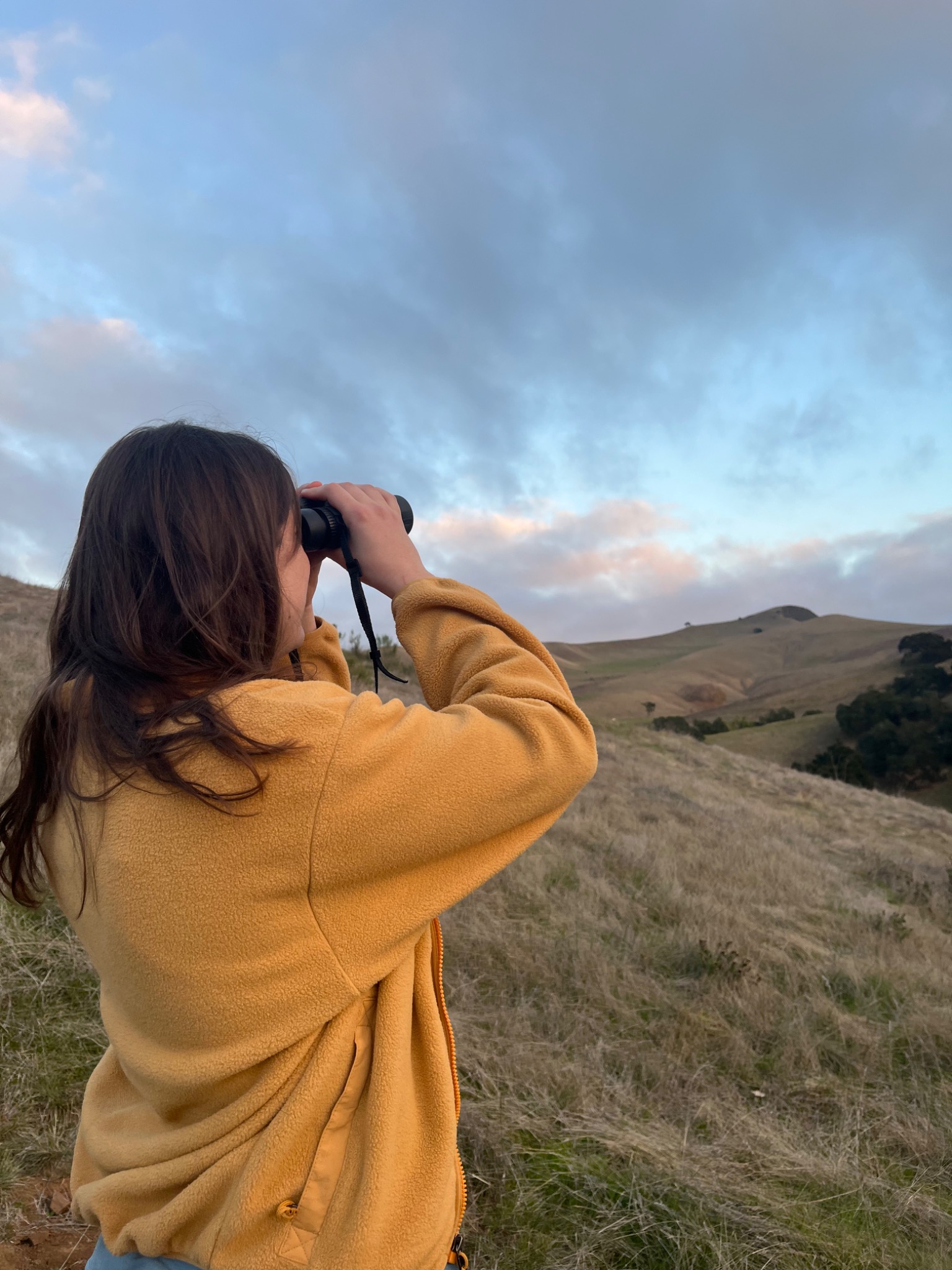
Footsteps sank into the yielding loamy soil, their rhythm blending with the hum of eager conversation. As the group crested a gentle incline, the Morro Bay Estuary unfolded before them, glistening in the golden hour. A California thrasher’s call filled the air with its elaborate melody, and the chatter fell instantly silent.
"Hand me those ‘nockers," came a whisper, the excitement now laced with urgency.
Brooklyn George, a graduate student pursuing a master’s degree in nutrition at California Polytechnic State University San Luis Obispo (Cal Poly), took hold of a pair of binoculars and scanned a patch of dense shrubbery.
Though the songbird did not reveal itself to George, her smile only widened as she turned to her fellow birders.
“That’s a lifer!” George exulted, documenting her first observation of the species in an online crowdsourced bird-sighting database called eBird.
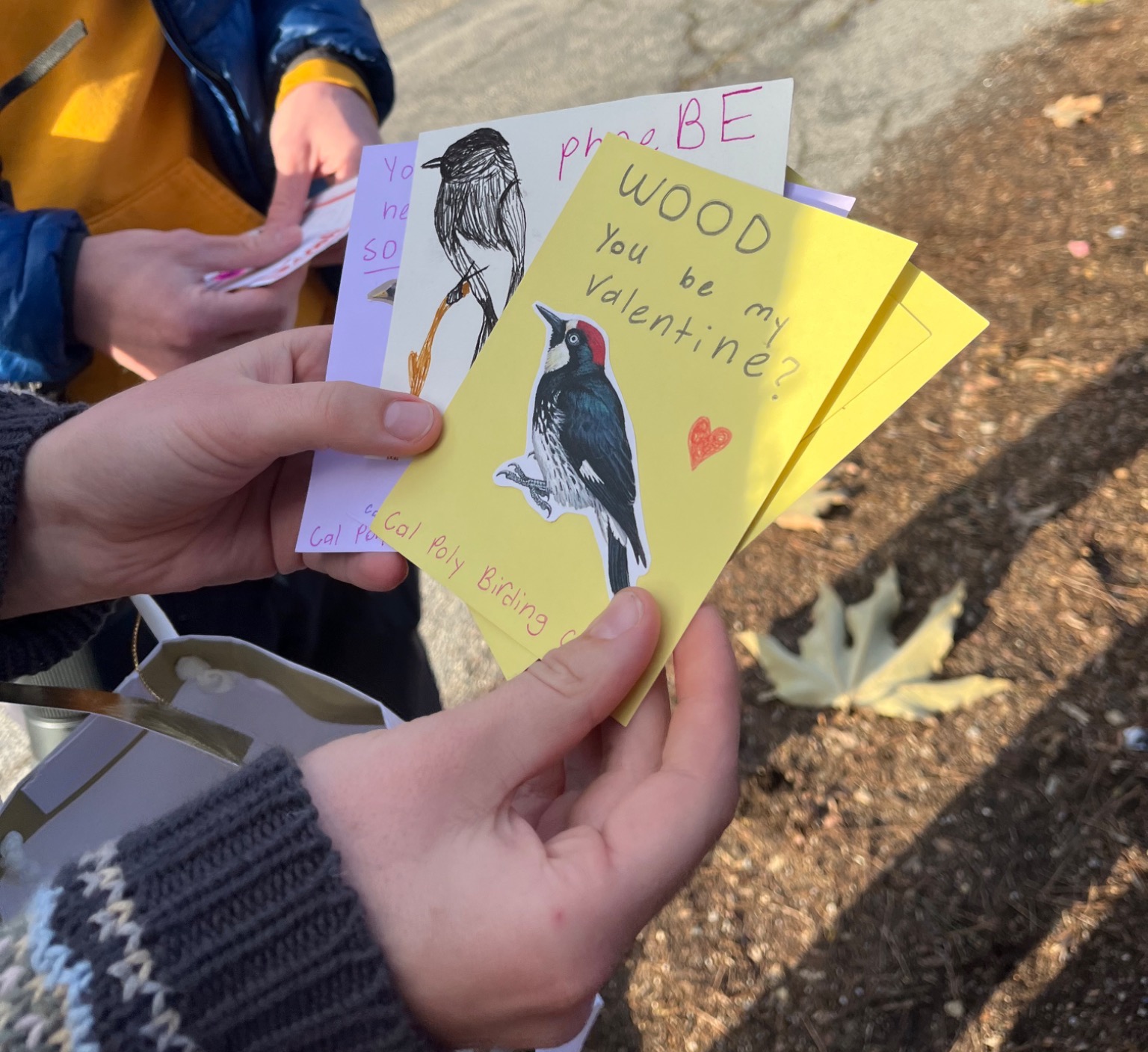
George’s passion for birding inspired her to launch Cal Poly Birding in November, just in time for many birds’ winter migration during January and February.
Although still unofficial as far as the university is concerned, the club’s GroupMe already boasts over 50 members and near-daily engagement. The many uploaded bird photos are invariably celebrated by the group's default reaction—a dinosaur, which is a nod to birds’ Jurassic ancestors.
When describing birding to others, George likened it to playing the popular mobile game Pokémon Go, except that it’s real life, with real animals and more potential for connecting with like-minded people.
As far as digital connection goes, take Cornell Lab of Ornithology’s citizen science website eBird. It connects birders worldwide, allowing users to upload birding data and photos for use by scientists, researchers and naturalists. It also functions as a social media platform, albeit without messaging capabilities, letting members view others' data and public profiles.
George noted that members can track submissions from specific locations, creating a sense of non-verbal camaraderie among birding communities at local, regional, and global levels.
True to birders’ “outdoorsy” natures, various birdwatching communities collide outside when avian enthusiasts meet at hotspots. During the club’s outings, George has connected with members of birding communities outside the Cal Poly bubble, such as members of the Morro Coast Audubon Society.
Steve Schubert, former president of the Morro Coast Audubon Society and Cal Poly alum, said in an email that the diverse habitats of the Central Coast provide prime birdwatching opportunities. The region, stretching from Ventura County in the south to Monterey County in the north, hosts the largest Global Important Bird Areas in California.
Morro Bay in particular is somewhat of an avifauna capital, as it is one of the most significant waterbird stopover and wintering locations south of San Francisco, Schubert wrote. No wonder Forbes Magazine called the city “California's hottest winter birding destination” in 2022. Located on the Pacific Flyway, the area is a major migratory corridor. It is also designated a State Important Bird Area by the National Audubon Society and a State and National Estuary, partially due to its four major bird habitats within city limits: the bay, saltmarshes, woodlands, and dunes.
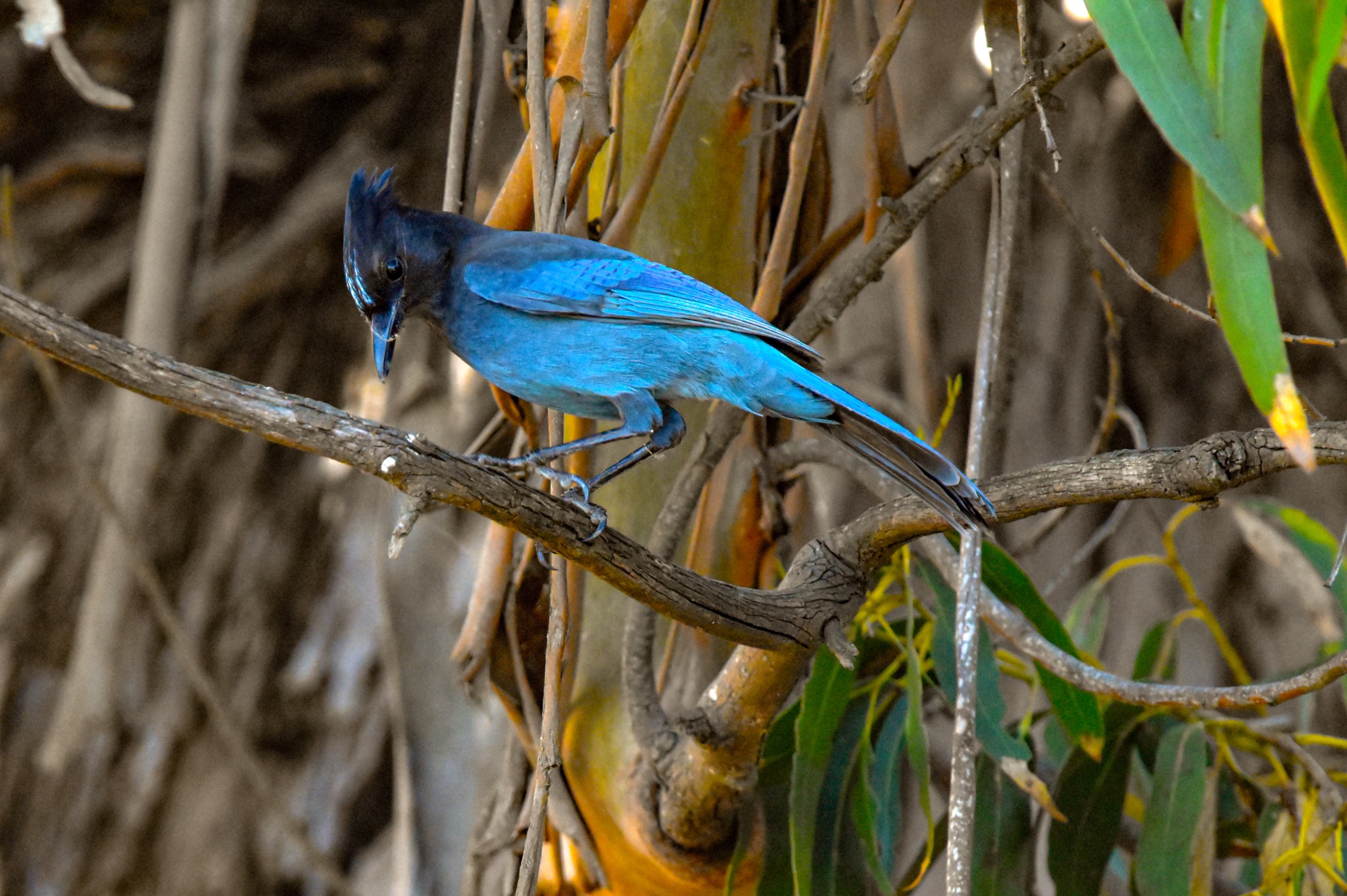
Besides boasting a large variety of birds, the area is home to imperiled species such as the snowy plover and the California condor.
Schubert served as a speaker and field trip leader for the 28th annual Morro Bay Bird Festival last month, a role he has held each year since its inception. More than 800 people from across the United States registered, but the festival board president told The Tribune on the second day that he expected 1,000 attendees—equivalent to roughly 10% of Morro Bay’s population – for the five-day event.
Other bird-related events are hosted in Morro Bay from January through February. Past events include the Morro Bay Bird Festival Community Family Day, the week-long art gallery exhibit "Focus on Birds," and the 20th annual Breakfast with the Birds.
Schubert, who also teaches natural history courses for Cuesta College Community Programs, has been leading a series of classes from late January to late March, including two focused on birds. One upcoming class, “Birding the Morro Bay Estuary,” will be held on Feb. 22.
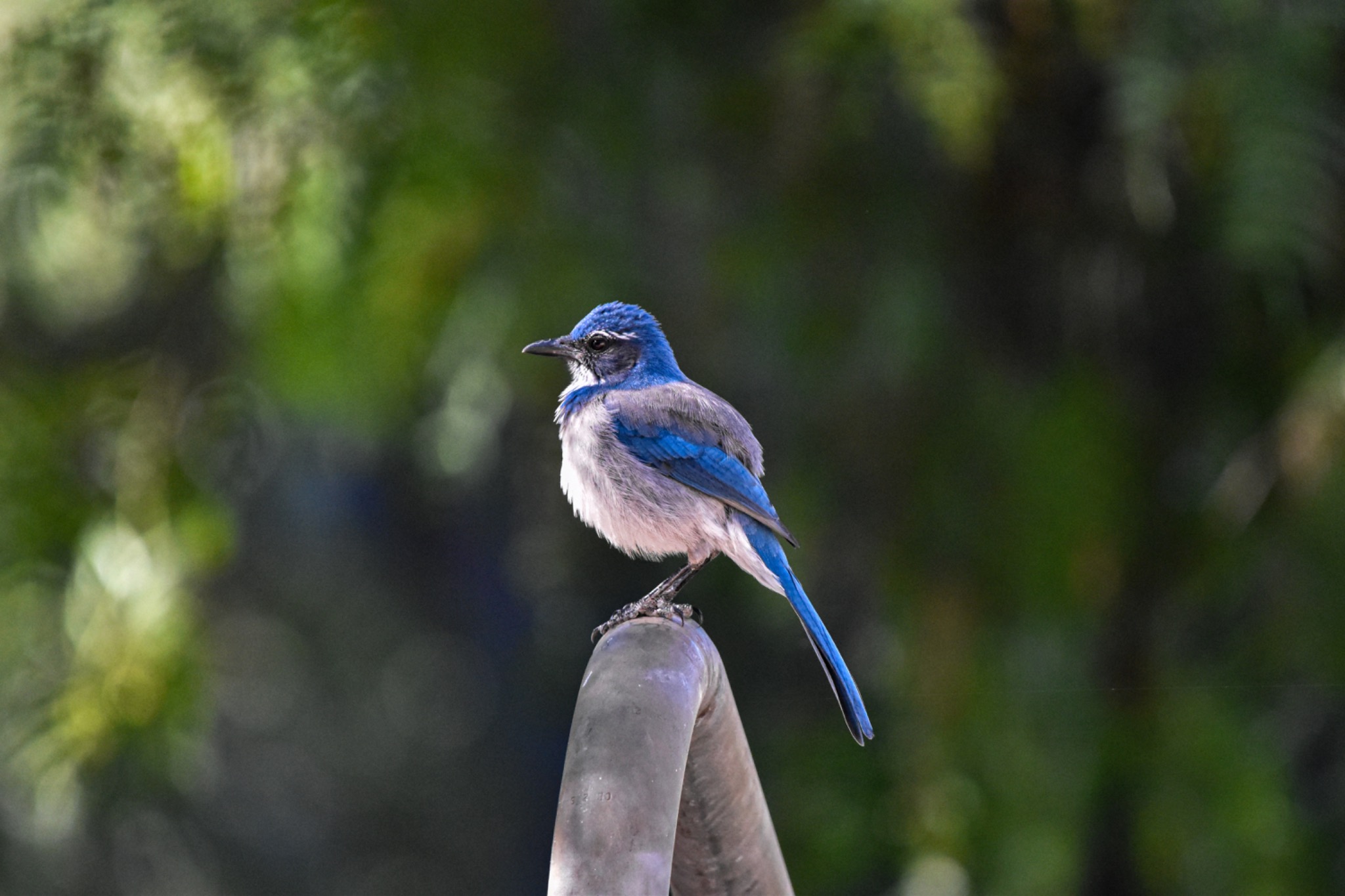
The many people who bird in San Luis Obispo County seem to be dazzled by an array of loons, grebes and gulls bobbing along its coast; awed by the American avocets, black-crowned night-herons and sea ducks along its shores; and enchanted by the Townsend’s warbler, California quail and Allen’s hummingbird residing inland.
Why birds? Lots of animals are fascinating to watch, but one is more likely to see a variety of birds on any given outing due to their ability to fly. This gives them the freedom to evolve striking plumages and distinctive songs and calls—traits that are generally considered pleasing and give one more opportunity to notice the birds.
George said she’s seen red-winged blackbirds all her life, but until she got into birding a year ago, they were just black birds to her—part of the background. Once she began birdwatching, she took a closer look and noticed, for the first time, the males' "very bright and striking" red shoulders and yellow wing bars. This immersion into real-life Pokémon Go has helped George appreciate the beauty in subtle things, she said.
George said the perspective birdwatching has afforded her “makes everything more fun and interesting and exciting, even if it's not some giant vista viewpoint.”
She acclaims her hobby’s value not only to her worldview, but also to her daily quota of fun, social exercise and education in natural sciences thanks to her fellow Cal Poly Birders, some of whom study ecology, environmental science and biology.
The Cal Poly Birders are a small part of the birding community in San Luis Obispo County, a region where birdwatching has become a way of life for many – helping people unplug from the constant stream of information in the digital age. One day a week, the Birders meet, and Brooklyn George brings extra ‘nockers for those who want to see the world through a different lens.
Post a comment